
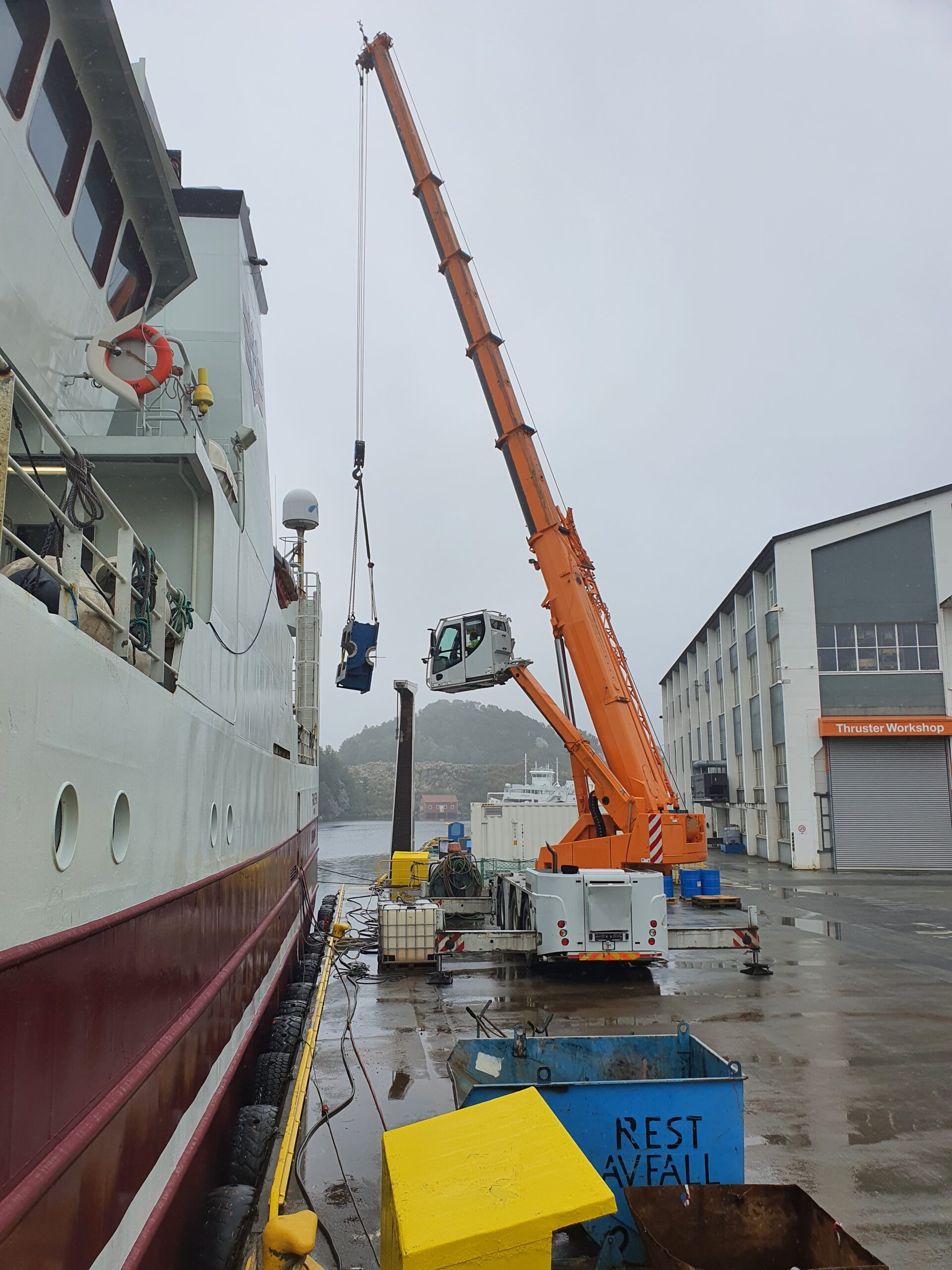
On-Site Mobile Machining for Gearbox Bearing Bores
On-site mobile machining for gearboxes is precision machining carried out where the gearbox is installed, so that worn or damaged components can be repaired without dismantling the installation or transporting parts to a workshop. Hedberg Technical Services uses mobile machining as part of on-site gearbox repairs, for example to machine the bearing bores of a marine gearbox. Project experience includes a complete marine gearbox overhaul with bearing bore machining in Rubbestadneset, Norway.
Updated
Key points
- Precision machining on site, so components are repaired without dismantling the installation or transport.
- Bearing bore machining in a marine gearbox is a typical application.
- Can be combined with an on-site gearbox overhaul.
- Shipping a large industrial gearbox to a workshop typically means 4 to 12 weeks of downtime, in Hedberg Technical Services’ experience.
On this page (7)
- What is on-site mobile machining for gearboxes?
- What is bearing bore machining and when is it needed?
- How is a gearbox bearing bore machined in situ?
- Why use on-site mobile machining for a gearbox instead of a workshop?
- How does mobile machining fit into a marine gearbox overhaul?
- What on-site machining work can Hedberg Technical Services carry out?
- Frequently asked questions
What is on-site mobile machining for gearboxes?
On-site mobile machining for gearboxes is precision machining done with portable machine tools at the gearbox's location. The tool is mounted directly on the housing or component and machines it in place. Hedberg Technical Services uses it so that components such as bearing bores can be repaired without dismantling the installation or transporting parts to a workshop.
A conventional machine shop brings the workpiece to the machine. Mobile machining brings the machine to the workpiece. For a gearbox housing that weighs several tonnes and is bolted to a foundation or built into a ship, that difference takes removal, transport and reinstallation out of the repair.
In gearbox work, mobile machining is typically part of a larger job. It is used when an on-site gearbox overhaul or an industrial gearbox inspection finds a worn seat or bore that has to be restored before the gearbox can be rebuilt.
What is bearing bore machining and when is it needed?
Bearing bore machining restores the bore in a gearbox housing that holds a bearing's outer ring, when that bore has worn, become oval or lost its fit. A worn bore lets the outer ring move in the housing. That movement causes heat, fretting, further wear and shaft misalignment. Machining brings the bore back to a true, round seat with the correct fit.
Signs that a bearing bore may need machining:
- Fretting marks or discolouration on the outside of the bearing outer ring
- An outer ring that has turned in the housing
- Measured bore diameter, ovality or taper outside tolerance
- Repeated failures of the same bearing
- Raised temperature or vibration at one bearing position
A worn bore also moves the shaft. Because the bore positions set the centre distance and parallelism of the gear shafts, bore wear can spoil the tooth contact pattern of the gears it carries.
How is a gearbox bearing bore machined in situ?
Bearing bore machining in situ generally follows five steps: measure the bore, mount a portable boring machine on the housing, align it to the correct bore axis, machine the bore, and verify the final dimensions. The fit is then restored, for example by fitting a sleeve in an oversize bore or by building the bore up and machining it back to size.
- Measure. The bore is measured at several depths and angles to map wear, ovality and taper. Its position relative to the other bores on the same shaft line is checked.
- Mount. A portable boring machine is fixed to the housing.
- Align. The machine is aligned to the correct bore axis, using undamaged reference surfaces. This step matters most, because the bore position sets the gear mesh alignment.
- Machine. The bore is machined in controlled cuts to a true, round shape.
- Restore and verify. The bore is brought back to the specified fit, and its final diameter, roundness and position are measured and recorded.
The two common restoration methods work differently. Sleeving removes enough material to give a sleeve a sound wall thickness; the sleeve is fitted with an interference fit and finish-machined to the bearing seat size. Building up adds material to the bore, for example by metal spraying or welding, which is then machined back to the original diameter.
Which restoration method suits a given bore depends on the wear depth, housing material, bearing type and required tolerance. The guide to gearbox bearing bore repair on site explains the options in more depth.
Why use on-site mobile machining for a gearbox instead of a workshop?
On-site mobile machining avoids removing a gearbox housing and transporting it to a workshop. For a large housing, removal, transport, workshop queue time and reinstallation can add weeks to a stop. In Hedberg Technical Services' experience, shipping a large industrial gearbox to a workshop typically means 4 to 12 weeks of downtime.
- Less downtime. The bore is repaired during the same stop as the overhaul.
- No transport risk. The housing stays where it is installed.
- Alignment kept. The housing is not removed from its foundation, so the bore is machined in the position where it will run.
For marine gearboxes, this fits with overhaul in port. In most cases, a full marine gearbox overhaul can be done in port with the vessel alongside the quay, without dry dock.
How does mobile machining fit into a marine gearbox overhaul?
Mobile machining lets the bearing bores of a marine gearbox be repaired on site as part of the overhaul, without transporting the housing to a workshop. Project experience includes a complete marine gearbox overhaul with machining of bearing bores in Rubbestadneset, Norway. Access and logistics are assessed during pre-mobilization planning.
Functional testing, including vibration analysis and performance verification, is done before the vessel returns to service. The written report records the work and is suitable for class documentation and maintenance records. See the Rubbestadneset project experience and the marine propulsion gearbox page.
What on-site machining work can Hedberg Technical Services carry out?
Hedberg Technical Services carries out precision machining of gearbox components on site, with bearing bore machining as the typical example. Whether a specific repair can be machined in place depends on the bore size, access, material and required tolerance. Per Hedberg confirms this during planning, based on the measurements and photographs you send.
To assess a machining job, send:
- Gearbox manufacturer, type and serial number
- Which bore or seat is damaged, with photographs
- Any measurements already taken
- Access around the gearbox and the planned stop window
How it works
From enquiry to report in four steps
- Send your enquiryCall, email or use the form. Per Hedberg answers directly, the same specialist who does the work.
- Technical reviewEquipment, symptoms and site conditions are clarified, and you receive a scope and a schedule.
- Work on siteInspection, overhaul, alignment or machining where the gearbox is installed, scheduled with you.
- Written reportFindings, measurements, photographs, parts replaced and recommendations for the next step.
Frequently asked questions
Does on-site machining require removing the gearbox?
No. On-site mobile machining is done with portable machine tools mounted on the gearbox housing where it is installed. Hedberg Technical Services uses it so that components such as bearing bores can be repaired without dismantling the installation or transporting parts to a workshop.
What causes gearbox bearing bore wear?
Gearbox bearing bore wear is usually caused by the bearing outer ring moving in the housing. This happens when the original fit is too loose, after a bearing failure, or through vibration and fretting over time. Once the ring moves, wear accelerates and the shaft position changes.
How do I know if a gearbox bearing bore is worn?
A worn gearbox bearing bore shows as fretting marks or discolouration on the bearing outer ring, an outer ring that has turned, repeated failures of the same bearing, or raised temperature at one position. Measurement of diameter, ovality and taper confirms it.
Can a worn bearing bore be repaired without replacing the housing?
Yes, in many cases. A worn bearing bore can often be machined on site and its fit restored, for example with a sleeve or by building up the bore and machining it back to size. The right method depends on wear depth, housing material and tolerance.
Can bearing bores in a marine gearbox be machined on site?
Yes. Hedberg Technical Services machines bearing bores in marine gearboxes on site. Project experience includes a complete marine gearbox overhaul with machining of bearing bores in Rubbestadneset, Norway. Access and logistics are assessed during pre-mobilization planning.
Keep reading
Related pages
On-Site Gearbox Overhaul
On-site gearbox overhaul for mill, kiln and marine gearboxes, done where the gearbox stands. Avoid 4 to 12 weeks of workshop downtime. Full written…
Read more →
Gearbox Bearing Bore Repair On Site
Gearbox bearing bore repair on site: why bores wear (spun bearings, fretting), how line boring and sleeving restore them, and how to verify the…
Read more →
Marine Gearbox Overhaul, Rubbestadneset, Norway
Marine gearbox overhaul at Rubbestadneset, Norway: project experience in a complete overhaul with bearing bore machining, and what the work involves.
Read more →
Marine Propulsion Gearbox
Marine propulsion gearbox overhaul in port, in most cases without dry dock: reduction gearboxes, clutches and bearing bores, with a class-ready…
Read more →
Contact
Request on-site gearbox overhaul, inspection or girth gear work. Enquiries are answered directly by gearbox specialist Per Hedberg. Call +34 621 03…
Read more →
Get in touch
Talk to a gearbox specialist
Send Per Hedberg photographs and measurements of the damaged bore to find out whether it can be machined on site.
Phone +34 621 03 40 48 · Email hedbergtech@pm.me