
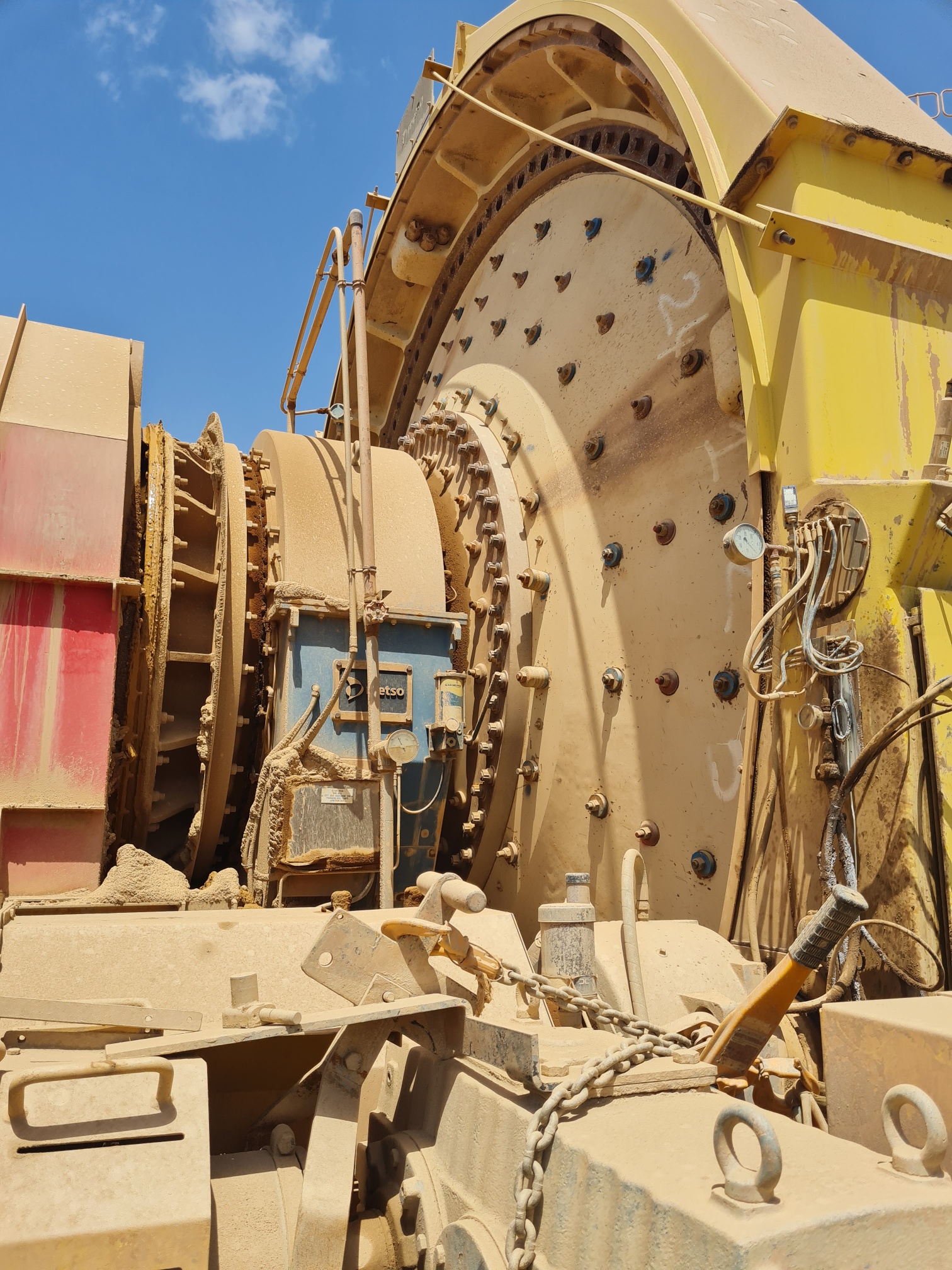
Industrial Gearbox Inspection On Site
An industrial gearbox inspection is a condition assessment that identifies wear, damage and the remaining service life of a gearbox. Hedberg Technical Services carries out industrial gearbox inspections on site at mines, cement plants and on vessels, worldwide. Per Hedberg inspects the gearbox where it is installed and documents the findings in a written report. The report gives you a basis for deciding whether to keep running, plan an overhaul or replace components.
Updated
Key points
- An industrial gearbox inspection identifies wear, damage and remaining service life.
- Carried out on site, with precision measuring equipment brought to the gearbox.
- In mining, inspection and overhaul should at minimum be planned into the annual extended shutdown.
- High-load equipment such as SAG mills and crushers benefits from more frequent checks based on operating hours and oil analysis.
- Findings, measurements and photographs are documented in a written report.
On this page (8)
- What is an industrial gearbox inspection?
- What is checked during an industrial gearbox inspection?
- What gear and bearing damage can a gearbox inspection find?
- How often should an industrial gearbox be inspected?
- Does a gearbox inspection require stopping production?
- What does a gearbox inspection report contain?
- What happens after an industrial gearbox inspection?
- Frequently asked questions
What is an industrial gearbox inspection?
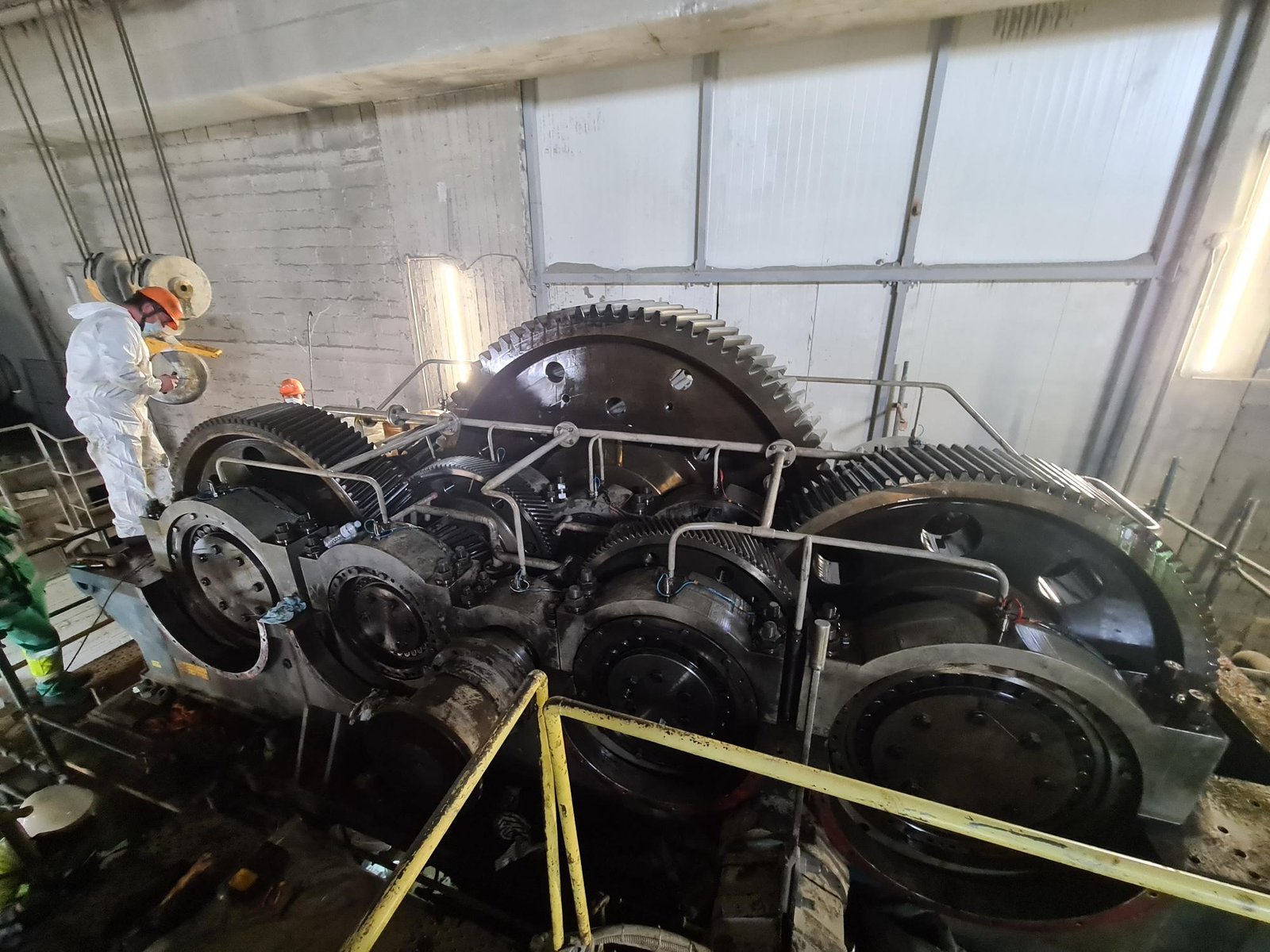
An industrial gearbox inspection is a structured condition assessment of a gearbox's gears, bearings, shafts, seals, housing and lubrication. It identifies wear and damage, points to the likely causes, and estimates how much service life remains. Hedberg Technical Services carries out the inspection on site, so the gearbox is assessed in its own installation and operating conditions.
Most gearbox damage develops slowly. Surface fatigue, wear and bearing damage can grow for months before they cause noise, heat or a trip. An inspection finds that damage while there is still time to plan the repair around a scheduled stop.
Project experience includes the inspection of a SAG mill gearbox, pinion and girth ring gear at a gold mine in Syama, Mali. The Syama project experience page describes the scope.
What is checked during an industrial gearbox inspection?
During an industrial gearbox inspection, Per Hedberg assesses the condition of the gear teeth, bearings, shafts, seals, housing and lubrication. The aim is to identify wear and damage, find the likely cause, and estimate the remaining service life. The scope of each inspection is set for the specific gearbox, based on its design, access and operating history.
| Component | What is assessed |
|---|---|
| Gear teeth | Contact pattern, pitting, micropitting, scuffing, wear and cracks |
| Bearings | Signs of fatigue, damage and abnormal running |
| Shafts and couplings | Damage, wear at seats and the condition of connections |
| Seals | Leaks and wear |
| Housing and bearing bores | Cracks, distortion and wear of bearing seats |
| Lubrication | Oil condition, contamination and debris |
| Operating data | Trends in temperature, vibration and oil analysis, where available |
Gearbox designs inspected include helical, bevel, planetary, worm and combined designs, on all major brands. Hedberg Technical Services is independent and is not affiliated with, authorized by or a service partner of any gearbox manufacturer. Brand names are used only to identify equipment.
What gear and bearing damage can a gearbox inspection find?
A gearbox inspection can find the common gear and bearing damage modes before they cause a failure. These include pitting, micropitting, scuffing, abrasive wear, tooth root cracks and bearing spalling. Each damage mode points to a different cause, such as overload, misalignment, lubrication problems or contamination, which shapes the repair and the corrective action.
| Damage mode | What it looks like | Common causes |
|---|---|---|
| Pitting | Small craters on the tooth flanks, often near the pitch line | Surface fatigue from repeated contact stress |
| Micropitting | Grey, matte areas on the tooth flanks | Thin lubricant film relative to surface roughness, high load |
| Scuffing | Scoring marks in the direction of sliding, often near the tooth tip or root | Breakdown of the lubricant film under high load, speed or temperature |
| Abrasive wear | Polished, thinned tooth profiles | Hard particles in the oil |
| Tooth root cracks and breakage | Cracks at the tooth root or missing tooth sections | Overload, bending fatigue, misalignment |
| Bearing spalling | Flaking of the raceway or rolling elements | Fatigue, contamination, poor lubrication, incorrect fit |
The guide to gear tooth failure modes explains each damage mode in more depth.
How often should an industrial gearbox be inspected?
Industrial gearbox inspection frequency depends on load, duty and operating environment. In mining, inspection and overhaul should at minimum be planned into the annual extended shutdown. High-load equipment such as SAG mills and crushers benefits from more frequent condition checks, based on operating hours and oil analysis. Critical drives without redundancy justify the closest attention.
Some events justify an inspection outside the normal plan:
- Rising vibration, bearing temperature or oil temperature
- Increased wear particles or water in oil analysis
- New noise from the gearbox
- Oil leaks or a lubrication system fault
- An overload event, a jam or a sudden stop of the driven equipment
- Repeated failures of the same bearing or seal
For a structured long-term plan, see gearbox lifetime management.
Does a gearbox inspection require stopping production?
Yes, for an internal inspection. An enclosed industrial gearbox must be stopped and isolated before inspection covers are opened. External checks such as leaks, noise, temperature and vibration can be made in operation. For girth gears, Hedberg Technical Services can often carry out an initial visual assessment, photography and basic measurements during normal operation.
Full tooth wear measurement and alignment checks on girth gears are typically done during a planned stop. Combining the internal gearbox inspection with the girth gear checks in one planned stop makes good use of the downtime. Read more about girth gear inspection and alignment.
What does a gearbox inspection report contain?
A gearbox inspection report from Hedberg Technical Services documents what was found, measured and photographed, and what it means for the gearbox. It includes an assessment of wear, damage and remaining service life, and recommendations on next steps. The report is written so that maintenance and reliability engineers can plan work and budgets from it.
The report covers:
- Findings for each inspected component
- Measurements taken
- Photographs of wear and damage as found
- An assessment of remaining service life
- Recommendations on next steps
The guide to the gearbox inspection report explains how to read and act on each part.
What happens after an industrial gearbox inspection?
After an industrial gearbox inspection, there are four usual routes: keep running with closer monitoring, plan a repair or overhaul for the next stop, carry out urgent work now, or replace components or the gearbox. Hedberg Technical Services recommends a route based on the measured condition, independent of any manufacturer.
If an overhaul is needed, it can be carried out as an on-site gearbox overhaul, without shipping the gearbox. The guide repair or replace a gearbox sets out how that decision is usually made.
How it works
From enquiry to report in four steps
- Send your enquiryCall, email or use the form. Per Hedberg answers directly, the same specialist who does the work.
- Technical reviewEquipment, symptoms and site conditions are clarified, and you receive a scope and a schedule.
- Work on siteInspection, overhaul, alignment or machining where the gearbox is installed, scheduled with you.
- Written reportFindings, measurements, photographs, parts replaced and recommendations for the next step.
Frequently asked questions
What is the purpose of an industrial gearbox inspection?
The purpose of an industrial gearbox inspection is to identify wear, damage and remaining service life before they cause an unplanned stop. Hedberg Technical Services documents the findings in a written report, so that repairs, overhauls or replacements can be planned into scheduled shutdowns.
Can a SAG mill gearbox be inspected on site?
Yes. A SAG mill gearbox can be inspected on site during a planned stop. Project experience includes the inspection of a SAG mill gearbox, pinion and girth ring gear at a gold mine in Syama, Mali. The gearbox and the girth gear drive can be assessed in the same stop.
How often should a mining gearbox be inspected?
In mining, gearbox inspection and overhaul should at minimum be planned into the annual extended shutdown. High-load equipment such as SAG mills and crushers benefits from more frequent condition checks, based on operating hours and oil analysis. Events such as rising vibration or overloads justify an extra inspection.
Will the inspection tell me how long my gearbox can keep running?
Yes. An industrial gearbox inspection by Hedberg Technical Services includes an assessment of remaining service life. It is based on the measured condition of the gears, bearings and other components, together with the operating history. The estimate should be confirmed at later inspections as conditions change.
Do you inspect marine gearboxes?
Yes. Hedberg Technical Services inspects marine gearboxes, including main propulsion, azimuth and bow thruster, winch and crane drive gearboxes. Per Hedberg works on brands such as Reintjes, ZF Marine, Rolls-Royce, Twin Disc, Wärtsilä and Lohmann & Stolterfoht. The company is independent of these manufacturers.
Keep reading
Related pages
Gearbox Borescope Inspection
Gearbox borescope inspection: what an endoscope can and cannot see, access points, gear tooth and bearing checks, when to open the gearbox and what…
Read more →
On-Site Gearbox Overhaul
On-site gearbox overhaul for mill, kiln and marine gearboxes, done where the gearbox stands. Avoid 4 to 12 weeks of workshop downtime. Full written…
Read more →
Girth Gear Services
Girth gear inspection and alignment for rotary kilns and mills: backlash, root clearance, runout, wear and new girth gear and pinion installation, on…
Read more →
Gearbox Lifetime Management
Gearbox lifetime management: remaining-life assessment, condition monitoring strategy and maintenance planning that turn breakdowns into planned…
Read more →
Gearbox Inspection Report
What a gearbox inspection report should contain: findings, measurements, photos, contact patterns, backlash, bearings, oil analysis and remaining…
Read more →
SAG Mill Inspection, Syama, Mali
SAG mill gearbox inspection at Syama, Mali: project experience covering gearbox, pinion and girth ring gear at a gold mine, and what the inspection…
Read more →
Get in touch
Talk to a gearbox specialist
Book an on-site industrial gearbox inspection with Per Hedberg for your next planned stop.
Phone +34 621 03 40 48 · Email hedbergtech@pm.me