
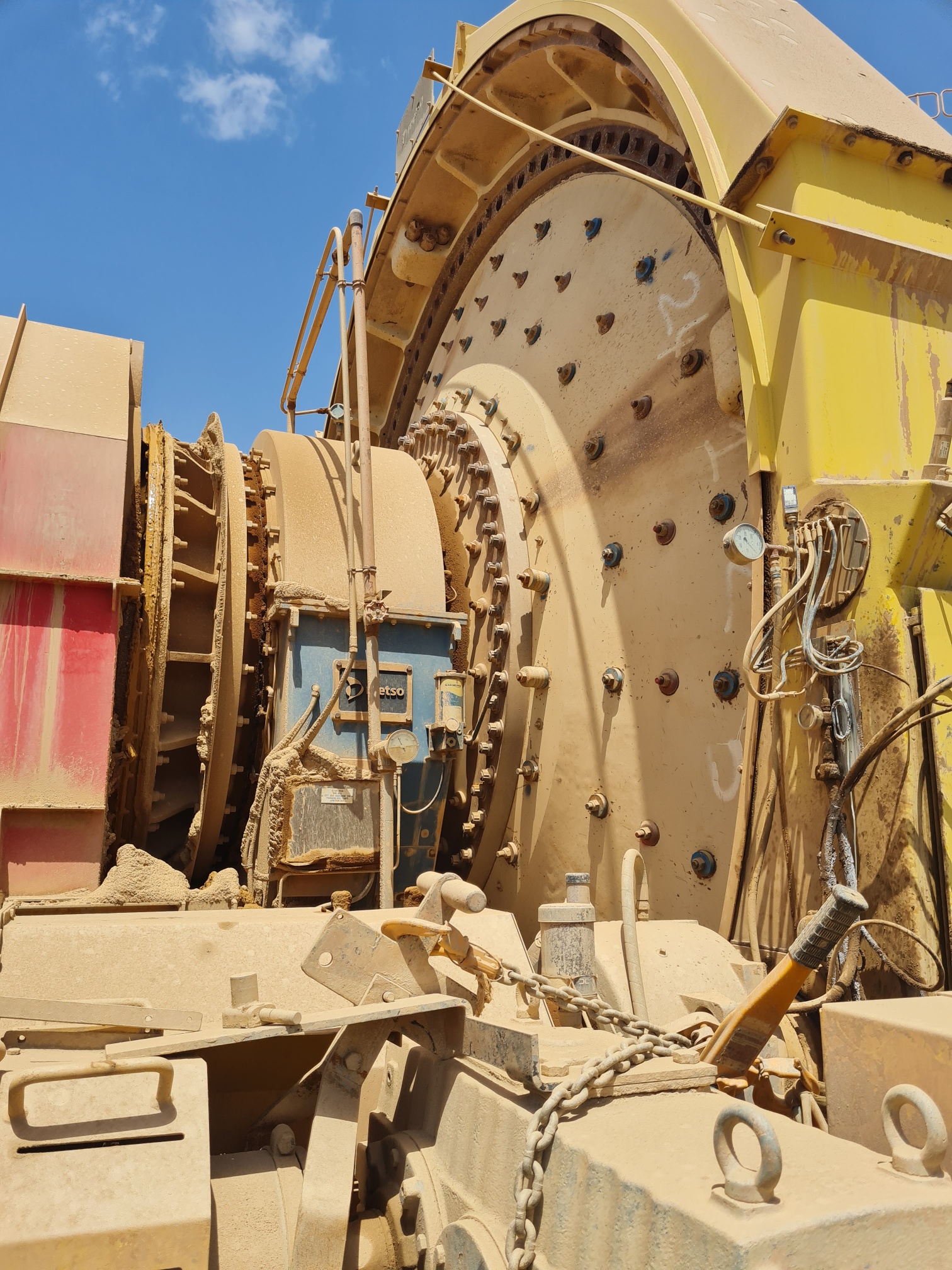
SAG and Ball Mill Gearbox Overhaul Procedure, Step by Step
A SAG mill gearbox overhaul procedure is the planned sequence of work that takes a mill gearbox from a running drive to an opened, measured, repaired and recommissioned one, inside a fixed shutdown window. The same procedure applies to ball mill gearboxes. This guide sets out each step of an on-site overhaul: planning around the reline, isolation, lifting, disassembly, measurement, parts, reassembly, alignment, run-in and the final report.
Updated
Key points
- Plan the gearbox overhaul into the mill reline or annual extended shutdown, with the scope set from oil analysis, vibration trends and a cover inspection.
- Isolate every energy source, including the main motor, inching drive, lubrication system and any stored rotation in the mill charge.
- Measure before you replace: bearings, tooth contact, backlash and housing bores decide the repair scope.
- Reassembly ends with alignment of the gearbox to the motor and pinion, a controlled run-in and recorded commissioning data.
- Shipping a large industrial gearbox to a workshop typically means 4 to 12 weeks of downtime, in the company’s experience; on-site work avoids removal and transport.
On this page (11)
- How is a SAG or ball mill gearbox overhauled on site, step by step?
- How should a mill gearbox overhaul be planned around a reline or shutdown?
- What isolation and lock-out does a mill gearbox overhaul require?
- What goes into the lifting plan for a mill gearbox?
- In what sequence is a mill gearbox disassembled?
- What is inspected and measured inside an opened mill gearbox?
- How are parts and repairs decided during a mill gearbox overhaul?
- How is a mill gearbox reassembled and aligned to the motor and pinion?
- What run-in and commissioning checks follow a mill gearbox overhaul?
- What should the report from a mill gearbox overhaul contain?
- Frequently asked questions
How is a SAG or ball mill gearbox overhauled on site, step by step?
A SAG or ball mill gearbox is overhauled on site in ten steps: plan the work into the shutdown, isolate and lock out the drive, prepare the lifting plan, disassemble, inspect and measure, confirm parts, reassemble, align the gearbox to motor and pinion, run in and commission, then report. Hedberg Technical Services carries out this full scope where the gearbox is installed.
| Phase | What is done | Typical outputs |
|---|---|---|
| 1. Planning | Review gearbox data, drawings, previous reports, oil analysis and vibration trends; fit the work into the reline or shutdown schedule | Scope of work, critical-path plan, parts and tooling list |
| 2. Isolation and lock-out | Isolate main motor, inching drive, lubrication and heating systems; secure the mill against rotation | Signed isolation record, verified zero-energy state |
| 3. Lifting plan | Confirm component weights, lifting points, crane capacity, rigging and laydown areas | Approved lifting plan, prepared laydown area |
| 4. Disassembly | Drain oil, record as-found settings, remove couplings, covers, housing top and shaft assemblies in sequence | As-found measurements, marked and photographed parts |
| 5. Inspection and measurement | Inspect gears, bearings, shafts, seals and housing; measure fits, bores, backlash and contact pattern | Findings list with measurements and photographs |
| 6. Parts and repairs | Confirm replacement parts; machine bearing bores or seats where needed | Final repair scope, parts fitted |
| 7. Reassembly | Clean, fit bearings, set clearances and backlash, check contact pattern, close the housing | As-built clearances and contact records |
| 8. Alignment | Align gearbox to motor and to pinion; check soft foot and fastener torques | Alignment data, as left |
| 9. Run-in and commissioning | Fill and verify lubrication, start in stages, monitor temperature, vibration and oil system | Commissioning data sheet, baseline readings |
| 10. Report | Compile findings, measurements, photographs, parts replaced, alignment and commissioning data | Written technical report and recommendations |
Time per phase depends on gearbox design, condition and site.
How should a mill gearbox overhaul be planned around a reline or shutdown?
A mill gearbox overhaul should be planned into the mill reline or the annual extended shutdown, with its scope defined before the mill stops. In mining, inspection and overhaul should at minimum be planned for annual extended shutdowns. SAG mills benefit from more frequent condition checks based on operating hours and oil analysis, and those checks set the overhaul scope.
Metso notes that reline planning often starts months before the shutdown, and that pre-staging parts and tooling before the mill stops prevents lost time. The gearbox work needs the same discipline, because it shares the shutdown window, the cranes and the access with the reline crew.
Inputs for the scope
- Oil analysis and vibration trends
- Findings from the last gearbox inspection through the covers
- Drawings, parts lists and the manufacturer’s instructions
- Previous overhaul reports and as-left alignment data
Sequencing with the reline
On many geared mills the inching drive turns the mill through the main gearbox. Liner changes need the inching drive, so gearbox work that breaks the drive train must be sequenced around the last mill rotation the reline crew needs. Agree this interface with the shutdown planner early. A timeline estimate for the gearbox work follows the initial assessment.
What isolation and lock-out does a mill gearbox overhaul require?
A mill gearbox overhaul requires isolation and lock-out of every energy source that could move the drive or release pressure or heat. That includes the main motor, any clutch, the inching drive, lubrication pumps, oil heaters and coolers. The mill itself must also be secured against rotation, because an unbalanced charge can turn the shell when the drive is disconnected.
- Electrical: main motor, inching drive, lubrication pumps and heaters.
- Mechanical: clutch or coupling disengaged and secured; mill brake or a locking device applied before couplings are opened.
- Stored energy: pressurised oil, clutch or brake air, and hot oil.
- Verification: a zero-energy test before work starts.
Lock-out must follow the site’s own hazardous energy procedure and the local regulation. In the United States, for example, this is OSHA 29 CFR 1910.147, The control of hazardous energy (lockout/tagout).
What goes into the lifting plan for a mill gearbox?
The lifting plan for a mill gearbox defines the weight and centre of gravity of every component to be lifted, the lifting points, the crane or hoist and its rated capacity at the working radius, the rigging, the route and the laydown positions. It is prepared before the stop. The heaviest single lift, usually the housing top or a gear and shaft assembly, sets the equipment needed.
- Component weights from drawings, never estimated on the day
- Rated lifting points and inspected rigging
- Crane capacity at the actual reach and height
- Exclusion zones, coordinated with reline lifts on the same crane
- Covered laydown areas with stands, so shafts and gears do not rest on bare concrete
Per Hedberg brings all precision tooling and measuring equipment to site. Cranes and lifting arrangements are agreed with the site during planning.
In what sequence is a mill gearbox disassembled?
A mill gearbox is disassembled in a planned sequence: drain and sample the oil, record as-found readings, disconnect couplings, remove covers and the housing top, then lift out the shaft assemblies from the output stage down to the input. Each part is marked, photographed and measured before it is moved, so the as-found condition is documented and reassembly is correct.
- Sample and drain the oil; check filters and drained oil for debris.
- Record as-found alignment, coupling gaps and accessible backlash.
- Disconnect couplings, guards and pipework.
- Remove covers and the housing top; check the split line for fretting.
- Match-mark bearing caps and shafts, and record shim packs.
- Lift out shaft assemblies in the manufacturer’s order.
As-found photographs and measurements are the most useful evidence for root-cause analysis, and they cannot be recreated once parts are cleaned.
What is inspected and measured inside an opened mill gearbox?
Inside an opened mill gearbox, the inspection covers gear teeth, bearings, shafts, seals and the housing. The key measurements are bearing condition and fits, tooth contact pattern, backlash, and housing bore size and roundness. These measurements decide which parts are reused, which are replaced and whether bearing bores need machining. Damage is described in standard terminology so findings can be compared over time.
Gear teeth
Every tooth flank is checked for micropitting, pitting, scuffing, wear and cracks. Terms follow ISO 10825-1:2022 or ANSI/AGMA 1010-F14. The contact pattern shows how load spreads across the face width; ISO/TR 10064-4 covers contact pattern checking.
Bearings
Rolling bearings are inspected for spalling, indentation, corrosion and creep, using ISO 15243:2017 terms. Shaft seats and housing fits are measured against drawing tolerances.
Backlash
Backlash is measured on each gear stage with a dial indicator or feeler gauges and compared with the manufacturer’s values. A change from the last recorded value points to tooth wear or bearing movement.
Housing bores
Bearing bores are measured for diameter and roundness. A worn bore lets the outer ring creep, and can often be restored by mobile machining on site. See gearbox bearing bore repair on site.
How are parts and repairs decided during a mill gearbox overhaul?
Parts and repairs during a mill gearbox overhaul are decided from the measured condition, compared with the manufacturer's limits and the remaining shutdown time. Bearings, seals and gaskets are commonly replaced. Gears and shafts are reused, repaired or replaced depending on the damage found. Long-lead items should be identified from condition data and ordered before the stop.
- Usually replaced: seals, gaskets, filters and damaged bearings.
- Repaired in place: worn bearing bores and seats by machining; minor tooth damage by dressing where the manufacturer allows it.
- Replaced or repaired in a workshop: cracked or broken gears and damaged shafts.
The repair or replace guide sets out how to weigh that choice.
How is a mill gearbox reassembled and aligned to the motor and pinion?
A mill gearbox is reassembled in the reverse order of disassembly, with bearing clearances, shim packs, backlash and contact pattern set and recorded at each stage. Once the housing is closed, the gearbox is aligned to the motor on the input side and to the pinion on the output side. Alignment values are taken from the manufacturer's data and the coupling limits.
Reassembly
- Clean the housing and confirm oil passages and spray nozzles are open.
- Fit bearings by controlled heating or pressing.
- Set axial float and preload with recorded shims, corrected where parts changed.
- Check backlash and no-load contact pattern before closing.
- Seal the split line and torque fasteners to specification.
Alignment
Alignment between motor, gearbox and pinion is checked with dial indicators or laser tools, after soft foot is corrected. Pinion alignment to the girth gear affects gearbox loading, so pinion contact and backlash are checked in the same stop. See girth gear alignment.
The manufacturer’s assembly and operating instructions take precedence over general practice. Flender’s instructions for its DMG2 girth gear unit for tubular mills are one example of the detail these documents contain. Hedberg Technical Services is independent and is not affiliated with, authorized by or a service partner of Flender. Brand names are used only to identify equipment.
What run-in and commissioning checks follow a mill gearbox overhaul?
Run-in and commissioning after a mill gearbox overhaul verify that the lubrication system works, temperatures stabilise, vibration is acceptable and the gear contact develops correctly under load. Checks start before rotation, continue through a staged start and end with recorded baseline readings. These readings become the reference for future condition monitoring and inspections.
- Before start: oil level, flow and pressure, filters, instrumentation, guards and removal of all locks.
- Without load: where possible, turn the drive on the inching drive and listen for abnormal noise.
- Staged start: monitor bearing and oil temperatures, oil pressure and vibration as load increases.
- Under load: record vibration on bearing housings; ISO 20816-9:2020 covers evaluation of vibration on gear units.
- After run-in: check contact pattern where accessible, inspect filters and take an oil sample.
Oil cleanliness can be reported as an ISO 4406 code, and ANSI/AGMA 9005-F16 covers industrial gear lubrication. Any first oil change follows the manufacturer’s instructions.
What should the report from a mill gearbox overhaul contain?
The report from a mill gearbox overhaul should contain the disassembly findings, component measurements, photographs, parts replaced, alignment data and commissioning data. Hedberg Technical Services delivers this as a written technical report after the work. The as-left values give the plant a baseline for the next inspection and a documented basis for spares and shutdown planning.
A useful report links each finding to a photograph and a measurement. See what a gearbox inspection report should contain.
Project experience
Project experience on SAG mill drives includes the inspection of a SAG mill gearbox, pinion and girth ring gear at a gold mine at Syama, Mali. Per Hedberg has more than 25 years of hands-on experience with industrial and marine gearboxes. For the service itself, see SAG mill gearbox overhaul on site.
Frequently asked questions
How long does a SAG mill gearbox overhaul take on site?
The duration depends on gearbox size, condition, parts availability and site access, so Hedberg Technical Services gives a timeline estimate after the initial assessment. For comparison, a cement mill gearbox overhaul on site typically takes 3 to 10 days in the company's experience, while a workshop route typically means 4 to 12 weeks of downtime.
Can a SAG mill gearbox overhaul be done during a liner change?
Yes, if the two scopes are sequenced. On many geared mills the inching drive turns the mill through the main gearbox, so drive-train work that disconnects it must be planned around the last mill rotation the reline crew needs. Cranes and access also have to be shared.
Is the procedure different for a ball mill gearbox?
No, the steps are the same: planning, isolation, lifting, disassembly, measurement, parts, reassembly, alignment, run-in and reporting. Ball mills usually see steadier loads than SAG mills, but the gearbox, pinion and girth gear are checked in the same way, and the manufacturer's instructions still apply.
Which measurements matter most inside a mill gearbox?
The measurements that matter most are bearing condition and fits, gear tooth contact pattern, backlash on each stage, and housing bore diameter and roundness. Together they show whether damage comes from wear, misalignment, lubrication or bearing movement, and they decide which parts are reused or replaced.
Does the mill gearbox need realigning after an overhaul?
Yes. After reassembly the gearbox alignment to the motor and to the pinion must be checked and corrected, including soft foot. Pinion contact and backlash on the girth gear are checked in the same stop, because pinion misalignment changes the load on the gearbox output stage.
What happens if a gear set must be replaced?
If a gear set is cracked or deeply pitted and no replacement is in stock, the plant must choose between a temporary return to service under close monitoring and an extended stop. Condition data collected before the shutdown allows long-lead gears and bearings to be ordered in time.
Sources and standards
- Grinding out performance when it comes to relines, Martin Rios, Metso (March 2024)
- OSHA 29 CFR 1910.147, The control of hazardous energy (lockout/tagout)
- ISO 10825-1:2022 Gears: Wear and damage to gear teeth, Part 1: Nomenclature and characteristics (ISO)
- ANSI/AGMA 1010-F14 Appearance of Gear Teeth: Terminology of Wear and Failure (ANSI Webstore)
- ISO/TR 10064-4:1998 Cylindrical gears: Code of inspection practice, Part 4: Recommendations relative to surface texture and tooth contact pattern checking (ISO)
- ISO 15243:2017 Rolling bearings: Damage and failures, Terms, characteristics and causes (ISO)
- ISO 20816-9:2020 Mechanical vibration: Measurement and evaluation of machine vibration, Part 9: Gear units (ISO)
- ISO 4406:2021 Hydraulic fluid power: Fluids, Method for coding the level of contamination by solid particles (ISO)
- ANSI/AGMA 9005-F16 (R2021) Industrial Gear Lubrication (ANSI Webstore)
- Siemens / FLENDER, BA 5150 EN 06/2010: FLENDER girth gear unit for tubular mills DMG2, assembly and operating instructions
Keep reading
Related pages
What Is Gearbox Lifetime Management?
Gearbox lifetime management defined: baseline inspection, condition monitoring, intervals, spares, remaining-life assessment and overhaul planning.
Read more →
Gearbox Borescope Inspection
Gearbox borescope inspection: what an endoscope can and cannot see, access points, gear tooth and bearing checks, when to open the gearbox and what…
Read more →
SAG Mill Gearbox
SAG mill gearbox overhaul at the mine: gearbox, pinion and girth gear checked as one drive train, no transport to a workshop, full written technical…
Read more →
Ball Mill Gearbox
Ball mill gearbox repair on site for mining and cement mills: gearbox, pinion and girth gear checked together. Avoid 4 to 12 weeks of workshop…
Read more →
On-Site Gearbox Overhaul
On-site gearbox overhaul for mill, kiln and marine gearboxes, done where the gearbox stands. Avoid 4 to 12 weeks of workshop downtime. Full written…
Read more →
SAG Mill Inspection, Syama, Mali
SAG mill gearbox inspection at Syama, Mali: project experience covering gearbox, pinion and girth ring gear at a gold mine, and what the inspection…
Read more →
Get in touch
Talk to a gearbox specialist
Planning a SAG or ball mill gearbox overhaul for the next shutdown? Send Per Hedberg the gearbox data, oil analysis and shutdown dates to scope the work.
Phone +34 621 03 40 48 · Email hedbergtech@pm.me